laboratory manual for general biology
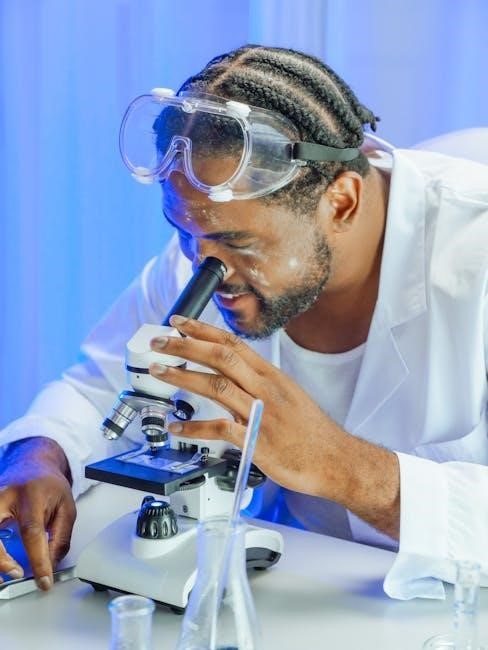
This manual provides a structured approach to general biology experiments, aligning with CBSE and NCERT syllabi, and adapting to evolving online learning environments.
Purpose and Scope
This laboratory manual serves as a comprehensive guide for students undertaking general biology coursework, encompassing practical applications of core concepts. It aims to develop essential laboratory skills – observation, data collection, analysis, and interpretation – crucial for scientific inquiry.
The scope extends to foundational areas like microscopy, cell structure, biochemical analyses, plant and animal biology, genetics, physiological processes, and ecological studies. Furthermore, it addresses the increasing need for virtual labs and remote data analysis, particularly relevant in contemporary distance learning scenarios, ensuring accessibility and adaptability.
Safety Protocols in the Biology Laboratory
Prioritizing safety is paramount in any biology lab. This section details essential protocols to minimize risks during experiments. Students must adhere to guidelines regarding proper attire – lab coats, eye protection, and closed-toe shoes – to prevent exposure to chemicals and biological hazards.
Safe handling of glassware, disposal of biohazardous waste, and emergency procedures are thoroughly outlined. Understanding potential hazards and practicing responsible conduct are vital for a secure learning environment, even when adapting to home-based lab activities.
Microscopy and Cell Structure
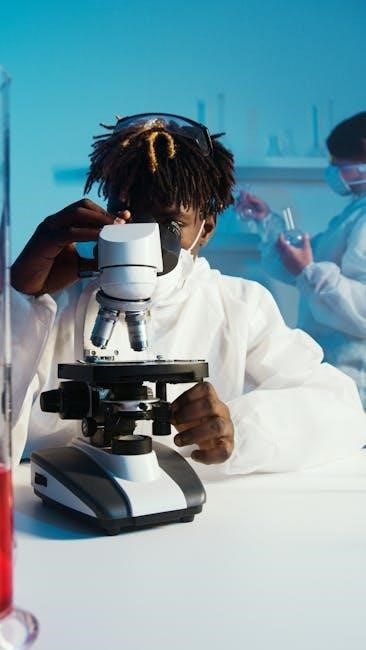
This section focuses on mastering microscopy techniques and identifying key cellular components in both plant and animal cells through observation.
Using the Microscope: Principles and Techniques
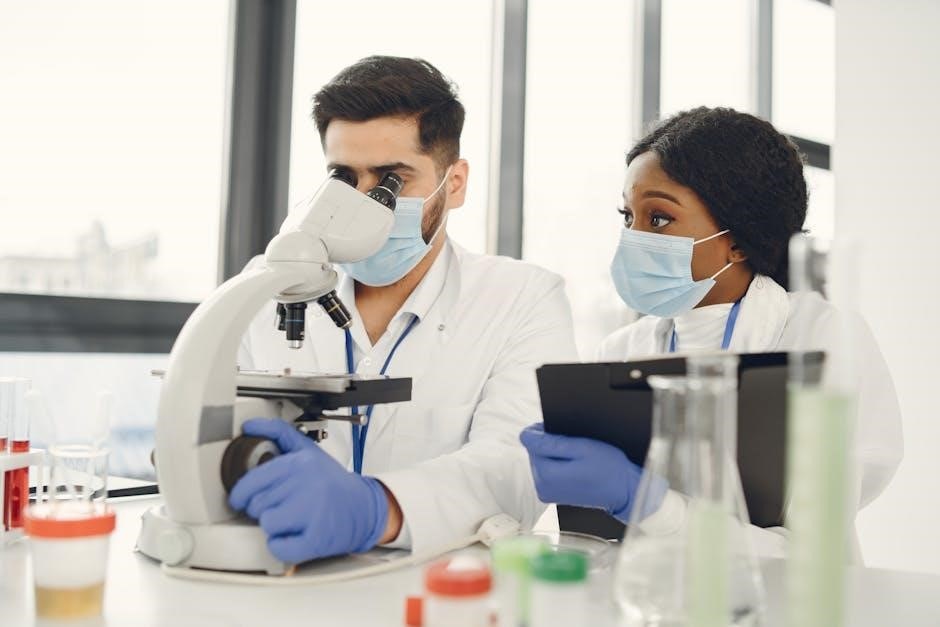
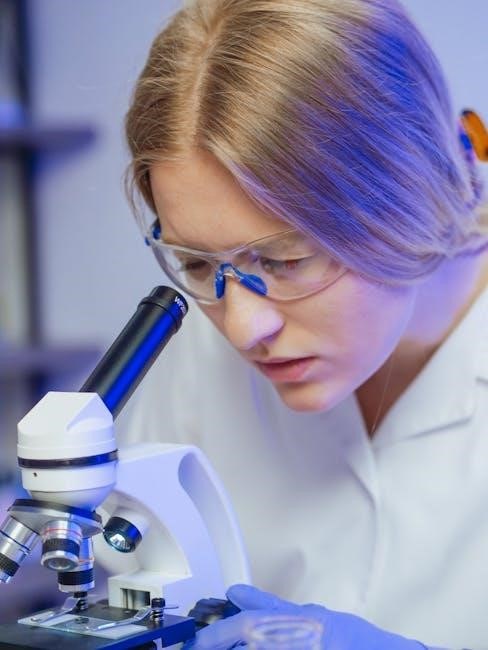
Microscopy is fundamental to biological study, enabling visualization of structures beyond the naked eye’s capability. This section details proper microscope handling, including correct illumination adjustments and focusing techniques. Students will learn about magnification, resolution, and the importance of preparing quality slides.
We’ll cover both wet mount and dry mount preparations, alongside staining methods to enhance contrast. Understanding objective lens powers and their corresponding total magnification is crucial. Proper cleaning and storage procedures will also be emphasized to ensure longevity of this vital laboratory equipment.
Observing Plant and Animal Cells
This practical exercise focuses on differentiating plant and animal cells through microscopic observation. Students will prepare slides of onion epidermal cells and cheek cells, utilizing appropriate staining techniques to highlight cellular structures.
Key features like the cell wall, nucleus, cytoplasm, and vacuoles will be identified and compared. Observations will emphasize the structural differences reflecting functional specializations. Detailed diagrams and labeling are required, fostering observational skills and reinforcing understanding of basic cell biology principles.
Cell Structure and Organelle Identification
Building upon microscopic observations, this section delves into identifying key organelles within both plant and animal cells. Students will utilize prepared slides and diagrams to locate and label structures like the nucleus, mitochondria, ribosomes, endoplasmic reticulum, and Golgi apparatus.
Emphasis is placed on understanding the function of each organelle and its contribution to overall cell activity. Comparative analysis will highlight differences in organelle presence and abundance between plant and animal cells, solidifying comprehension of cellular organization.
Biochemical Tests and Analysis
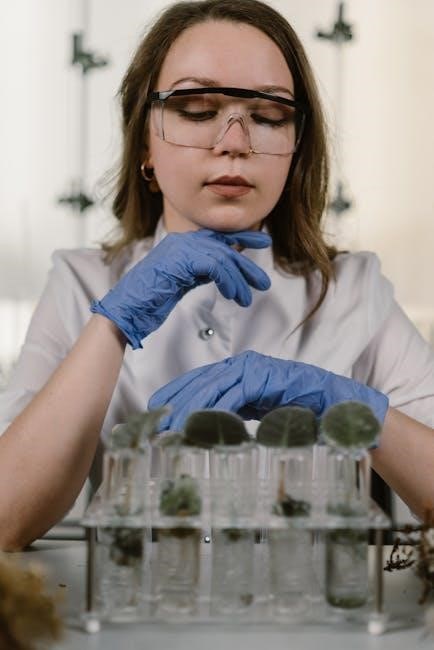
This section focuses on qualitative tests to identify biological macromolecules – carbohydrates, proteins, and lipids – utilizing standard laboratory procedures and reagents.
Testing for Biological Molecules: Carbohydrates, Proteins, and Lipids
This experiment details procedures for identifying key biological molecules. For carbohydrates, we’ll employ Benedict’s test, observing color changes indicating glucose presence. Protein detection utilizes the Biuret test, revealing violet hues with peptide bond formation. Lipid testing involves the Sudan III stain, showcasing oil droplets with a red coloration.
Students will learn to prepare samples, conduct controls, and interpret results, understanding the chemical basis of these vital compounds. Safety precautions regarding reagent handling are paramount, ensuring accurate and reliable biochemical analysis within the lab setting.
Enzyme Activity and Factors Affecting It
This lab investigates enzyme kinetics, specifically catalase’s decomposition of hydrogen peroxide. Students will measure reaction rates under varying conditions – temperature, pH, and substrate concentration – to observe their impact on enzyme activity. Data collection will involve monitoring oxygen production or product disappearance.
Analysis will focus on determining optimal conditions and understanding how deviations affect enzyme function. Emphasis is placed on the importance of controls and accurate data recording for reliable conclusions regarding enzyme behavior and biological regulation.
Plant Biology Experiments
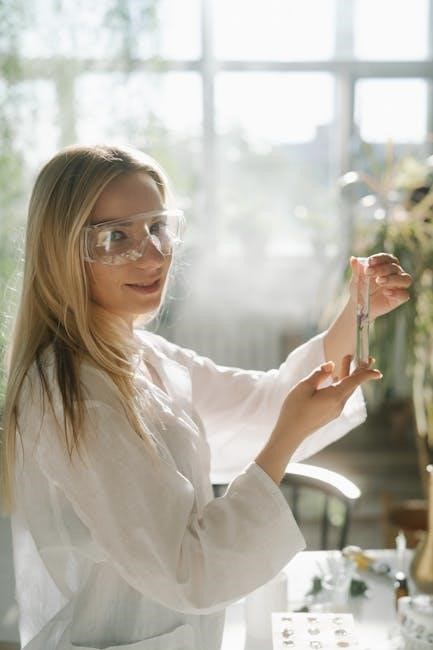
These experiments explore plant cell structures, photosynthesis, osmosis, diffusion, and anatomical features like roots, stems, and leaves, fostering a deeper understanding.
Plant Cell Structure and Photosynthesis
This section details experiments examining plant cell components – walls, chloroplasts, and vacuoles – using microscopy techniques. Students will observe these structures in various plant tissues, comparing and contrasting their features. Further investigation focuses on photosynthesis, exploring the process by which plants convert light energy into chemical energy.
Experiments may involve testing for starch production, observing the effects of light intensity on photosynthetic rate, and analyzing chlorophyll pigments. These hands-on activities reinforce theoretical concepts and develop observational skills, crucial for biological understanding.
Observing Osmosis and Diffusion in Plant Cells
This lab explores the vital processes of osmosis and diffusion within plant cells, demonstrating how water and solutes move across cell membranes. Students will investigate these phenomena using techniques like observing plasmolysis in Elodea cells under varying salt concentrations.
Experiments will also include observing the uptake of water in plant tissues and analyzing the effects of different solutions on cell turgor pressure. These activities provide a practical understanding of membrane transport and its importance for plant cell function and survival.
Plant Anatomy: Root, Stem, and Leaf Structures
This section focuses on the detailed anatomical examination of plant organs – roots, stems, and leaves – revealing their specialized structures and functions. Students will prepare microscope slides of transverse sections from each organ, identifying key tissues like xylem, phloem, and epidermis.
Observations will highlight adaptations related to water transport, nutrient absorption, and photosynthesis. Comparative analysis of structures from different plant types will demonstrate the diversity and evolutionary adaptations within the plant kingdom.
Animal Biology Experiments
This section details investigations into animal tissues and dissection exercises, providing hands-on experience with animal anatomy and physiological systems.
Observing Animal Tissue Types
This experiment focuses on identifying the four primary animal tissue types: epithelial, connective, muscle, and nervous. Students will prepare microscope slides from various animal tissue samples, utilizing staining techniques to enhance visualization of cellular structures.
Detailed observation and comparison of tissue morphology will be crucial, noting differences in cell shape, arrangement, and intercellular matrix. Emphasis will be placed on correlating tissue structure with its specific function within the organism.
Proper slide preparation and microscopic techniques are essential for accurate identification and analysis, fostering a deeper understanding of animal physiology.
Dissection of a Representative Animal (e.g., Earthworm, Frog)
This lab involves the careful dissection of a representative animal, commonly an earthworm or frog, to explore internal anatomy. Students will follow a detailed dissection guide, identifying major organ systems – digestive, circulatory, respiratory, and reproductive – and their associated structures.
Precise anatomical observation and accurate labeling are paramount, fostering a comprehensive understanding of organ system integration and physiological function. Ethical considerations regarding animal use will be discussed.
Proper dissection techniques and instrument handling are crucial for a successful and respectful learning experience.
Genetics and Heredity
Explore Mendelian genetics through monohybrid and dihybrid crosses, and gain practical skills in DNA extraction from plant or animal tissues for analysis.
Mendelian Genetics: Monohybrid and Dihybrid Crosses
This section focuses on applying Gregor Mendel’s laws of inheritance through practical exercises. Students will predict and observe phenotypic ratios resulting from monohybrid crosses, analyzing traits passed down from parent generations.
Further exploration involves dihybrid crosses, examining the inheritance of two distinct characteristics simultaneously. Utilizing Punnett squares, students will calculate probabilities of different genotypes and phenotypes.
Data analysis will reinforce understanding of dominant and recessive alleles, segregation, and independent assortment, solidifying core genetic principles through hands-on experimentation and observation.
DNA Extraction from Plant or Animal Tissue
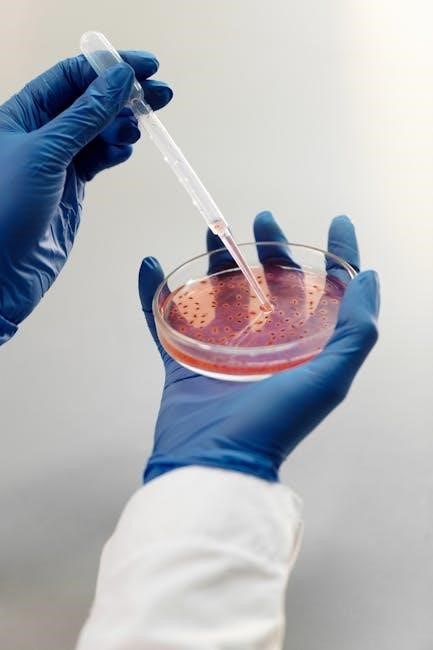
This experiment guides students through the process of isolating DNA from readily available biological samples, such as fruits (strawberries, bananas) or animal cells. The procedure involves cell lysis, using detergents to break down cell membranes, and precipitation of DNA with alcohol.
Students will observe the physical characteristics of DNA – its stringy, white appearance – and understand the principles behind each step.
This hands-on activity reinforces the concept of DNA as the genetic material and provides a foundational understanding of molecular biology techniques.
Physiological Processes
This section explores vital functions in living organisms, including measuring heart rate, blood pressure, and investigating respiration rates under varying conditions.
Heart Rate and Blood Pressure Measurement
This experiment details protocols for accurately measuring resting and post-exercise heart rates, alongside systolic and diastolic blood pressure readings. Students will learn proper techniques for utilizing sphygmomanometers and stethoscopes, ensuring reliable data collection.
Analysis focuses on interpreting physiological responses to physical activity, understanding factors influencing cardiovascular function, and recognizing potential health implications. Data will be recorded, graphed, and statistically analyzed to draw meaningful conclusions about human physiology.
Safety protocols emphasize careful instrument handling and respectful interaction with lab partners during measurements.
Investigating Respiration in Living Organisms
This lab explores cellular respiration rates in various organisms – yeast, germinating seeds, and potentially small invertebrates – using different methods. Students will quantify oxygen consumption or carbon dioxide production as indicators of metabolic activity.
Techniques may include utilizing respirometers, monitoring gas exchange with sensors, or observing color changes in indicator solutions. Data analysis will involve calculating respiration rates under varying conditions, like temperature or substrate availability.
Emphasis is placed on understanding the link between respiration and energy production for life processes.
Ecology and Environmental Science
This section focuses on ecological principles through hands-on investigations, including population studies and water quality analysis, fostering environmental awareness.
Studying Population Density and Distribution
This experiment guides students in estimating population sizes using various techniques, like quadrat sampling, to determine density within defined areas. Students will analyze distribution patterns – random, uniform, or clumped – and correlate these with environmental factors.
Data collection involves careful observation and counting of organisms in selected habitats. Analysis includes calculating densities, creating distribution maps, and interpreting results to understand ecological relationships. Considerations include sampling bias and the limitations of estimation methods, promoting critical thinking skills.
The lab emphasizes the importance of accurate data recording and statistical analysis in ecological studies.
Analyzing Water Quality Parameters
This lab focuses on assessing water health through key physical and chemical tests. Students will measure parameters like pH, dissolved oxygen, temperature, turbidity, and nitrate/phosphate levels, utilizing appropriate testing kits and meters.
Data interpretation involves comparing results to established water quality standards and identifying potential sources of pollution. Analysis will reveal the impact of these parameters on aquatic life and ecosystem health.
The experiment stresses the importance of responsible environmental stewardship and the interconnectedness of water quality and biodiversity.
Adapting to Online/Distance Learning
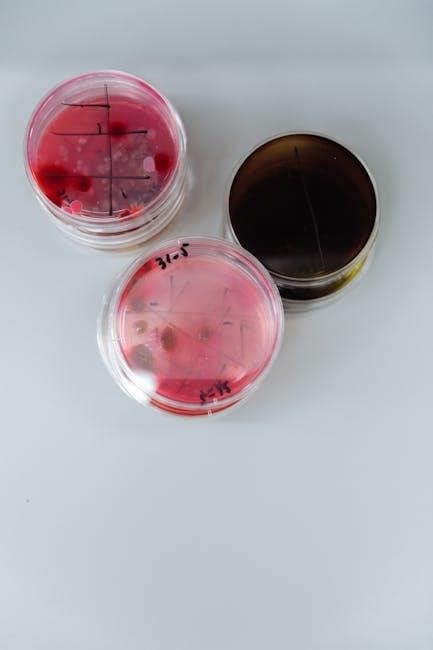
Virtual labs and simulations offer accessible alternatives to traditional experiments, addressing challenges posed by distance learning and the recent pandemic shifts.
Virtual Labs and Simulations
Embracing digital tools is crucial for effective remote biology education. Virtual labs provide interactive experiences, mimicking real-world experiments without physical constraints. These simulations allow students to manipulate variables, collect data, and analyze results – fostering critical thinking skills.
Access to these resources, often through online platforms, ensures continuity of learning during disruptions. They supplement traditional methods, offering a safe and cost-effective alternative. Furthermore, virtual environments can visualize complex biological processes, enhancing comprehension and engagement for diverse learners.
Data Collection and Analysis in Remote Settings
Remote learning necessitates innovative approaches to data handling. Students can utilize spreadsheets and statistical software for analyzing datasets generated from virtual experiments or home-based observations. Emphasis should be placed on accurate recording, organization, and interpretation of results.
Collaborative platforms facilitate data sharing and peer review, mimicking the dynamics of a traditional lab setting. Instructors can provide guidance on data visualization techniques and statistical analysis, ensuring students develop robust analytical skills essential for biological research.
Appendix
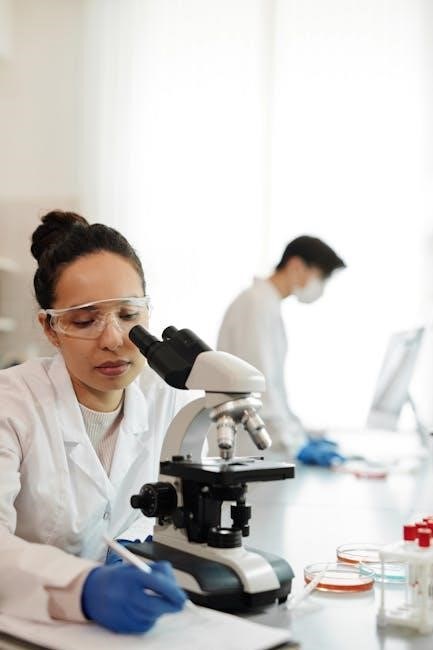
This section details essential resources: reagent lists, equipment guides, and troubleshooting tips, supporting successful experiment execution and understanding within the manual.
Commonly Used Reagents and Solutions
This appendix component lists frequently utilized chemicals and solutions crucial for experiments. It includes detailed information on each reagent’s composition, concentration, and safe handling procedures. Examples encompass common buffers like phosphate-buffered saline (PBS), staining solutions such as methylene blue, and indicators like iodine solution for starch testing.
Precautions regarding storage, potential hazards, and proper disposal methods are also provided. Furthermore, instructions for preparing solutions from stock concentrations are included, ensuring accurate experimental results and promoting laboratory safety for all users of this manual.
Laboratory Equipment List and Usage
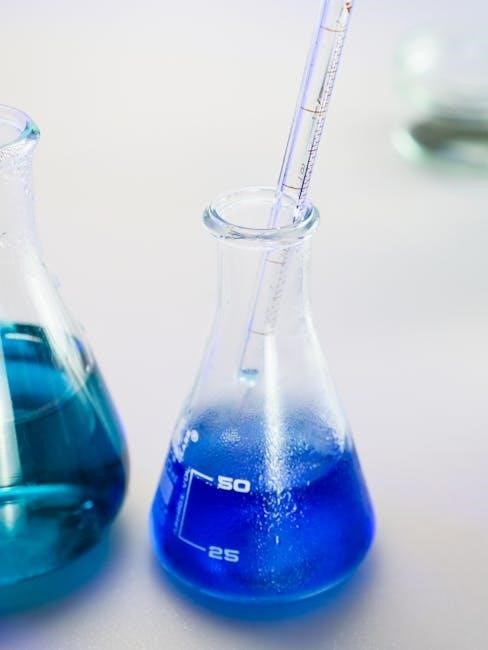
This section details essential equipment found in a general biology lab, including microscopes, glassware (beakers, flasks, pipettes), spectrophotometers, and dissection tools. Each item’s function is explained, alongside proper usage instructions and maintenance guidelines.
Safety protocols for each piece of equipment are emphasized, covering aspects like electrical safety and handling fragile materials. Diagrams and illustrations aid in understanding, ensuring students can confidently and safely utilize the tools for accurate experimental procedures and data collection.
Troubleshooting Common Experimental Issues
This guide addresses frequent challenges encountered during biology labs, such as inaccurate measurements, unexpected results, or equipment malfunctions. It provides systematic approaches to identify the source of errors – be it procedural, equipment-related, or reagent-based – and offers practical solutions.
Students learn to critically evaluate their experimental setup, data, and potential sources of contamination. Emphasis is placed on recording observations meticulously to facilitate effective problem-solving and ensure reliable experimental outcomes.